
The anticipation of starting your therapy could be equally as tough for several people as the actual period of going through with it.
Table of Contents
ToggleThere are a number of people who are either aware or have an idea that they need to seek support through professional assistance, but for some, understanding how to make the first step is a mystery.
A common and frequently asked question regarding this subject is whether continuing with group therapy or pursuing individual therapy will be more productive.
The mental health professionals acknowledge both forms of therapy as being proven clinically to be effective and accepted as valid means of delivering therapeutic assistance to individual clients.
On the other hand, each treatment modality has the ability to assist in resolving different emotional areas as well as individual client attitudes and preferences.
By understanding how each method operates, you will acquire enough confidence and comfort level in your individual decision-making process.
Understanding the Basics of Therapy
Therapy is a space in which individuals can address their emotional, mental, and/or behavioral challenges in a systematic way. The process is supervised by a professional therapist who is supported by requisite training in listening, helping, and providing safe avenues for healing.
There are different types of therapy that can generally be categorized into two types – individual therapy and group therapy.
Both serve the same purpose of helping to foster better mental health but can provide very different experiences for participants.
What Is Group Therapy?

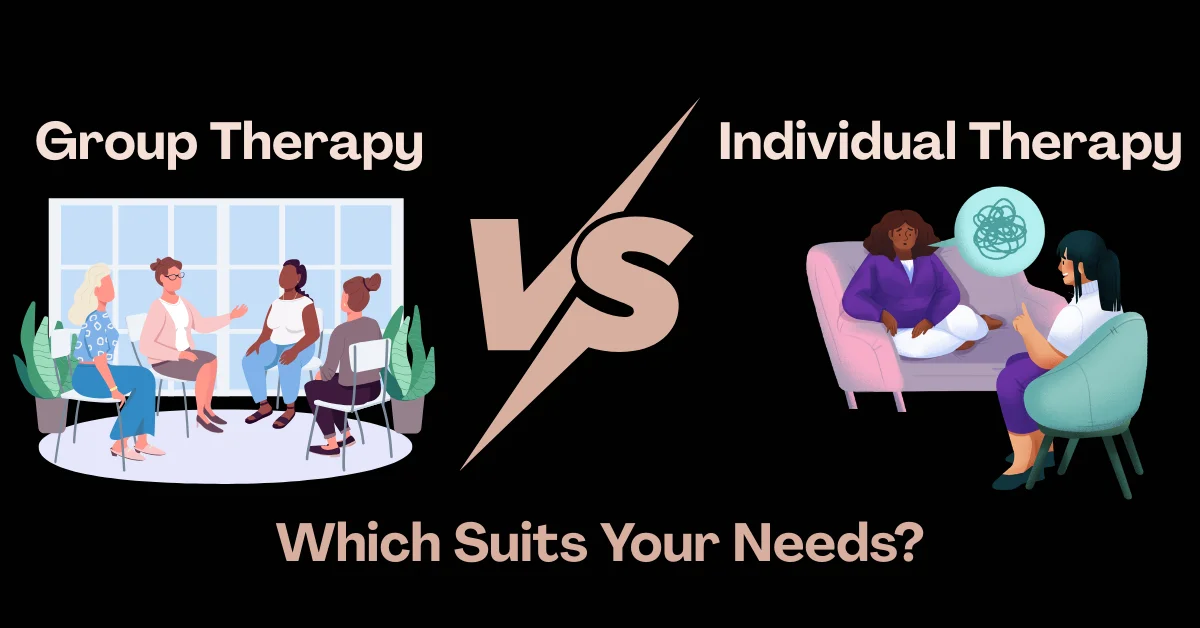
A therapist will be working with multiple members of a group simultaneously during group therapy.
The sizes of the groups normally consist of 6 to 12 people who have similar problems (e.g., anxiety, depression, trauma, or issues in their relationships).
Although the format of the group therapy session is structured, the participants will be allowed to participate in open discussions during group therapy sessions. For example, the participants will listen to, share with, and support each other as the therapist facilitates group discussions.
Many people are surprised at how powerful it can be to hear other people’s expressions of feelings that they believed were only their own.
Benefits of Group Therapy
A great way to feel accepted and supported in therapy is through a shared experience within a group. Realizing that there are other people dealing with the same problems that you are can help you feel less alone.
Having the opportunity to hear different viewpoints from both your therapist and fellow participants can provide you with greater insight than if you were just to see your therapist individually.
Group therapy sessions can be a wonderful way for someone with social anxiety or difficulty communicating to help develop self-confidence and learn how to function emotionally in society.
What Is Individual Therapy?

Individual therapy is a one-on-one session with your therapist, usually in a private setting. Individual therapy is focused solely on you and your thoughts, feelings, and issues you are facing individually.
This style of counseling allows you to have a personalized experience and to explore your thoughts and feelings without any pressure to discuss them with others or compare them to other experiences.
For many people who are experiencing a very private or complicated situation, they prefer to receive therapy this way.
Benefits of Individual Therapy
The greatest asset of individual sessions is their privacy. You have the opportunity to express yourself freely without any concern of being judged or disrupted.
A second great benefit of this type of therapy is that the therapist provides individualized care. The techniques used will be tailored to fit your specific needs.
This way of working works for people who appreciate self-reflection, organization, and having a safe place to heal.
Comparing Group and Individual Therapy
Your choice between group therapy and individual therapy will depend on your personal preferences and what you hope to achieve through therapy.
Group therapy promotes connection and healing as part of a group, whereas individual therapy allows the participant to enjoy greater insight into themselves and build depth of understanding.
Some individuals may feel empowered through group discussions, while others may find the most benefit in individual sessions.
Both methods have their own advantages and are not necessarily superior to each other; they are simply different.
Who Should Choose Group Therapy?
If you’re feeling alone or disconnected from others, group therapy might be a good fit, as this type of therapy is often beneficial to people who have issues with relationships, self-esteem, or socialization.
If listening to the stories of others gives you some sense of validation rather than making you feel overwhelmed, group therapy sessions could be the right choice for you.
Group therapy can also be a more cost-effective way to receive professional assistance.
Who Should Choose Individual Therapy?
For those who prefer privacy or might have difficulties expressing themselves in public, individual therapy is a good option when looking for a safe environment to work through personal issues.
- An individual therapy session can be utilized to work through trauma, loss, and/or personal issues.
- You can use the individual format to ensure that you are completing emotional work without having external influences affecting your progress.
Can You Combine Both?
Many people also agree with this statement. Some begin by engaging in therapy for themselves individually and later join a group to participate in therapy together. Others choose to combine therapies simultaneously.
As there are different types of therapies available, it is possible to combine different approaches together to create an overall more balanced healing experience.
The professional therapist you are working with will assist in determining the best combination of therapies for you.
How to Decide What Therapy You Need

Consider how you’re actually going to feel when you see someone else in therapy, and that will help you understand how you’ll feel about being in therapy too.
Does watching someone else do something make you feel good, or does it make you feel sad for them?
Do you feel comfortable opening up to them quickly, or do you take time to build up to that?
There are no right or wrong answers to those questions because you’re already demonstrating self-awareness by going to therapy, which shows strength.
Therapy is not about fixing yourself but instead is about getting a greater understanding of yourself.
Final Thoughts
Who you choose for group therapy and individual therapy depends ultimately on the benefits each type offers to you.
The most important thing is to make the initial step. Whether it be entering the group’s space or your therapist’s space, you have chosen to give yourself care, clarity, and respect.
If you are unsure of where to begin or feel overwhelmed by all the options, finding a qualified mental health provider can help you make an informed decision about what works best for you.
Resources such as The Holding Hand provide supportive environments to learn about potential therapies, your own unique needs, and how to make the next step confidently with the assistance of a trusted professional therapist. Often, you can begin to heal through a simple dialogue.
Your decision today may affect you more than you believe possible, and you will not be doing it alone.
FAQs
1. How do I know whether group therapy or individual therapy is right for me?
The right choice depends on your comfort level, personality, and goals. If you value privacy and want focused, personalized attention, individual therapy may suit you better. If you benefit from shared experiences and learning from others, group therapy might be a good fit. A qualified provider, such as professionals at The Holding Hands, can help guide your decision.
2. Is group therapy confidential?
Confidentiality is an important part of group therapy. Therapists set clear guidelines to ensure privacy and mutual respect among members. While therapists are legally bound to maintain confidentiality, group members are also expected to honor the privacy of what is shared during sessions.
3. Can I switch from one type of therapy to another?
Absolutely. Many people start with individual therapy and later join a group, while others do the reverse. Therapy is flexible, and your needs may change over time. You can adjust your approach as you grow and gain clarity about what works best for you.
4. Is group therapy more affordable than individual therapy?
In many cases, yes. Because the therapist works with multiple participants at once, group sessions are often more cost-effective than one-on-one sessions. If budget is a concern, group therapy can provide professional support at a lower cost.
5. Can I participate in both group and individual therapy at the same time?
Yes, combining both formats can be highly beneficial. Individual therapy allows for deeper personal exploration, while group therapy provides connection and shared learning. Your therapist can help create a balanced approach that supports your healing journey.
 The Holding Hands